Top VIG Holdings Ranked by Dividend Growth Consistency (2015–2025)
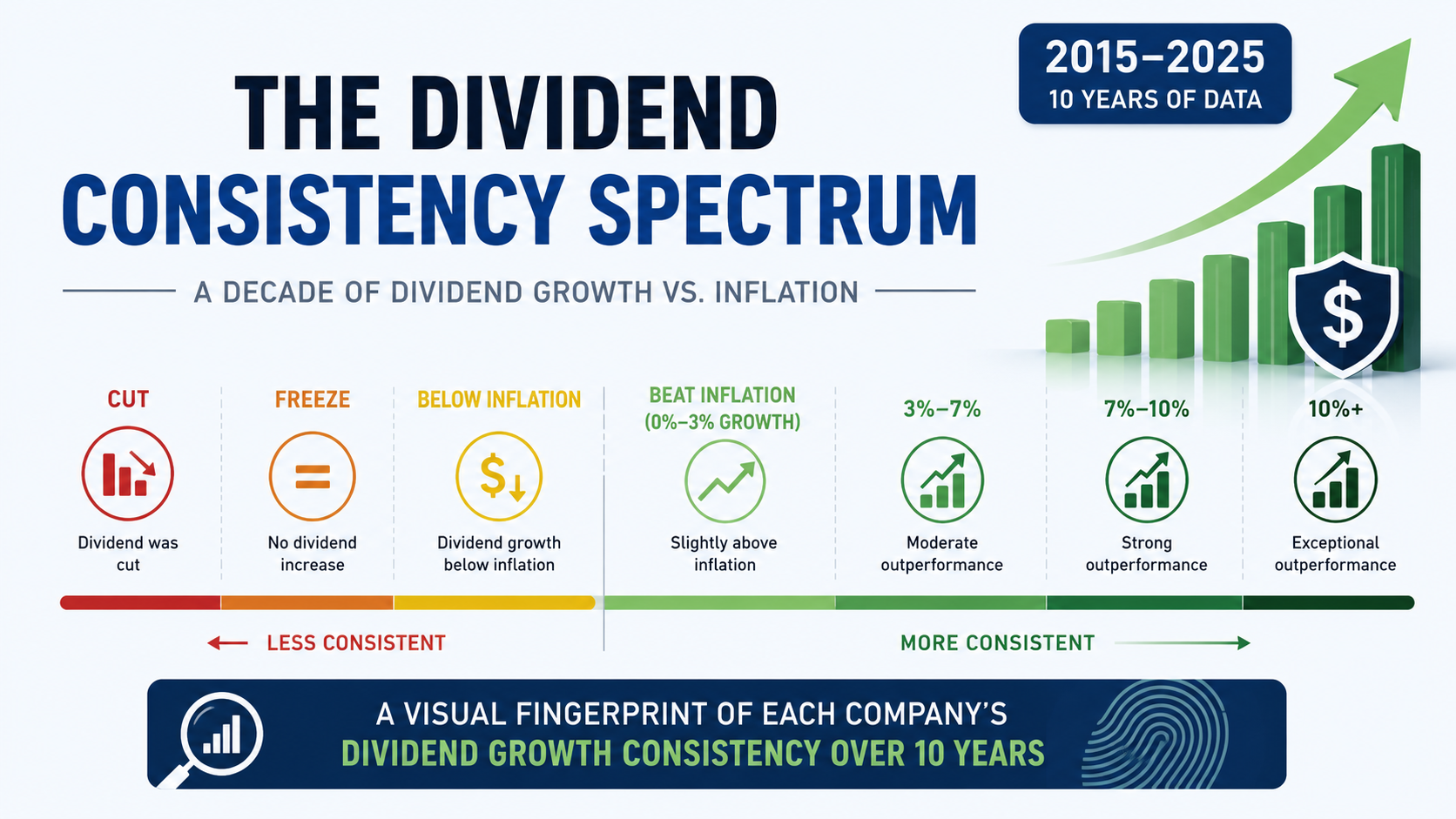
Not all dividend investors measure dividend growth the same way.
Current yield is easy to compare, but it says very little about how reliably a company has increased shareholder income over time.
This analysis looks at the 10 largest holdings in the Vanguard Dividend Appreciation ETF (VIG) and examines every annual dividend increase between 2015 and 2025.
Instead of simply asking whether dividends increased, the charts classify each year by how much dividend growth exceeded—or failed to exceed—U.S. inflation. The result is a visual fingerprint of each company's long-term dividend consistency.
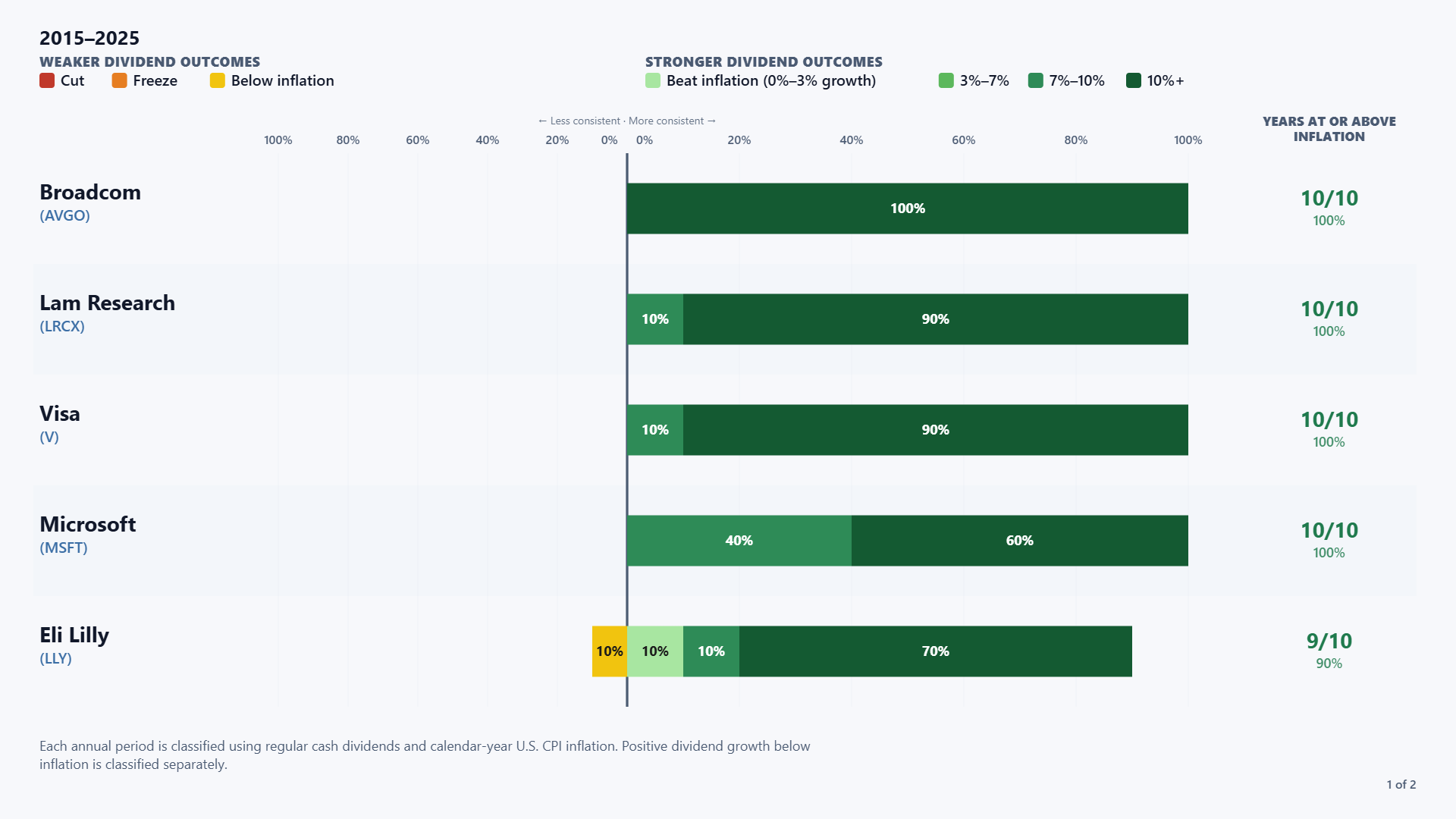
The first chart highlights the strongest performers.
Broadcom stands out with a perfect record. Every annual dividend increase beat inflation, and every increase exceeded ten percent. That level of consistency is exceptional, even among elite dividend growth companies.
Lam Research and Visa also achieved perfect inflation-beating records, with nearly all of their dividend increases comfortably above ten percent.
Microsoft followed closely behind, delivering inflation-beating increases every year while maintaining consistently strong growth.
Eli Lilly narrowly missed perfection after one year of dividend growth fell below inflation. Even so, nine out of ten years still preserved and expanded shareholders' purchasing power.
These companies demonstrate that dividend quality isn't just about maintaining a streak. Consistently increasing dividends faster than inflation allows long-term income to compound in real terms.
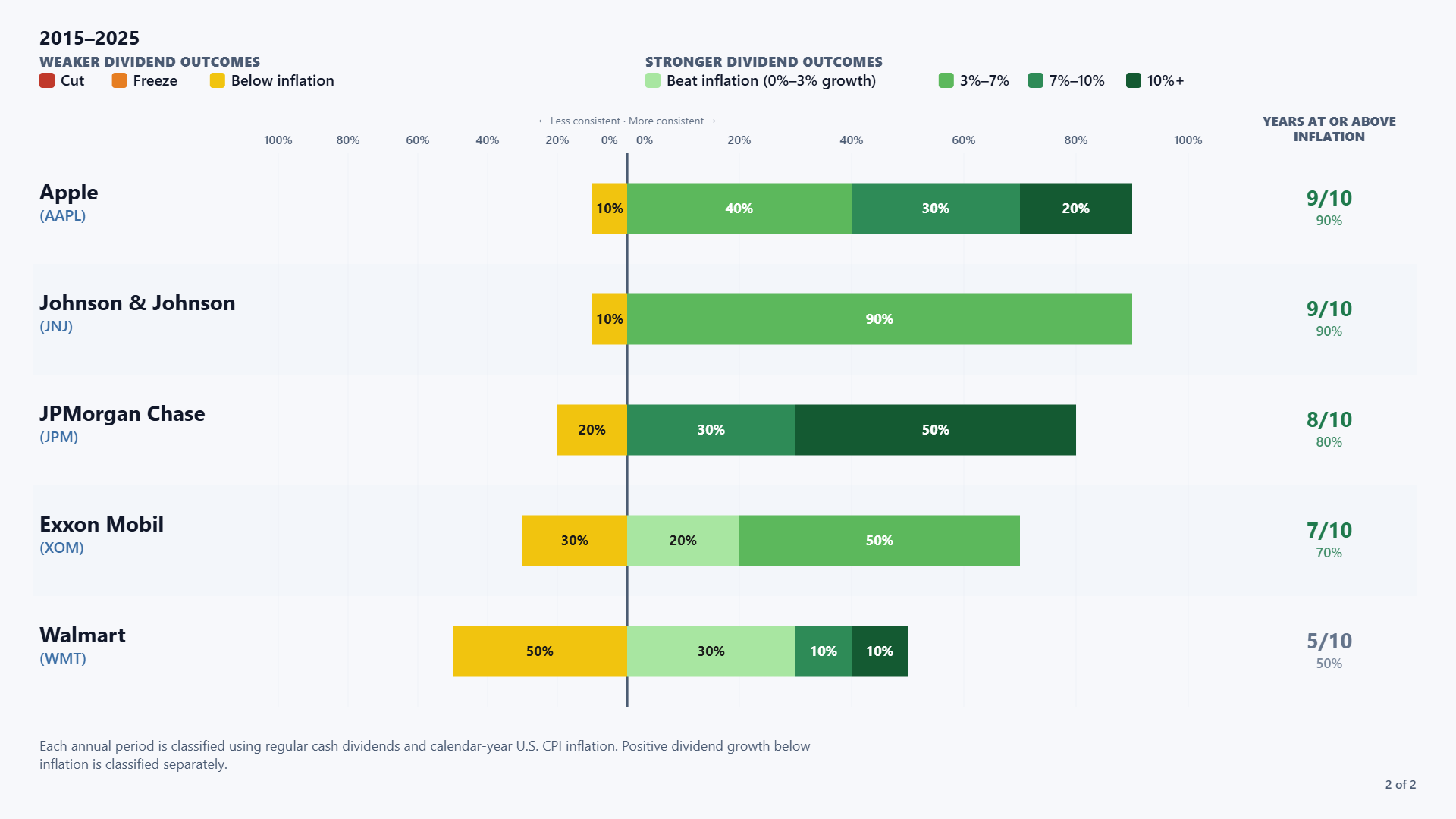
The second chart shows that dividend growth consistency exists on a spectrum.
Apple and Johnson & Johnson both recorded nine inflation-beating years, yet their growth profiles are very different. Apple combined moderate and higher-growth increases, while Johnson & Johnson relied on smaller but remarkably dependable annual raises.
JPMorgan Chase delivered several years of strong dividend growth alongside a few slower periods, resulting in eight years above inflation.
Exxon Mobil illustrates the challenges faced by cyclical businesses. Although the company maintained its dividend growth record, several increases only narrowly exceeded inflation during weaker commodity environments.
Walmart represents the most conservative profile in this group. Half of its annual dividend increases fell below inflation, demonstrating that a long dividend growth streak does not automatically translate into growing purchasing power.
Final Takeaway
Dividend growth is only part of the story.
The more meaningful question for long-term income investors is whether those dividend increases consistently outpace inflation.
Companies that repeatedly deliver real dividend growth can steadily increase the purchasing power of portfolio income over time, while slower-growing dividends may gradually lose ground despite continuing annual increases.
Visualizing dividend growth through this lens reveals differences that traditional yield comparisons often miss.
If you'd like to explore dividend growth, income trends, and other visual portfolio analytics, you can analyze your own investments with DividendXray.