Shell vs Exxon Mobil vs Chevron vs BP: Energy Dividend Stock Battle
Portfolio Overview
In this DividendXray battle, we compare four of the world's largest energy dividend stocks across dividend growth, yield-on-cost expansion, total return, and income generation.
Shell (SHEL) combines a strong starting dividend with disciplined capital allocation and has delivered impressive dividend growth in recent years. Exxon Mobil (XOM) is an integrated energy giant known for its scale, financial strength, and long history of returning cash to shareholders. Chevron (CVX) emphasizes consistent shareholder returns through dividends, share repurchases, and a resilient balance sheet. BP (BP) offers one of the highest current dividend yields in the group while continuing its transition toward a more diversified energy business.
Although all four companies operate within the global energy sector, they present different tradeoffs between current income, dividend growth, and long-term shareholder returns.
Category Winners
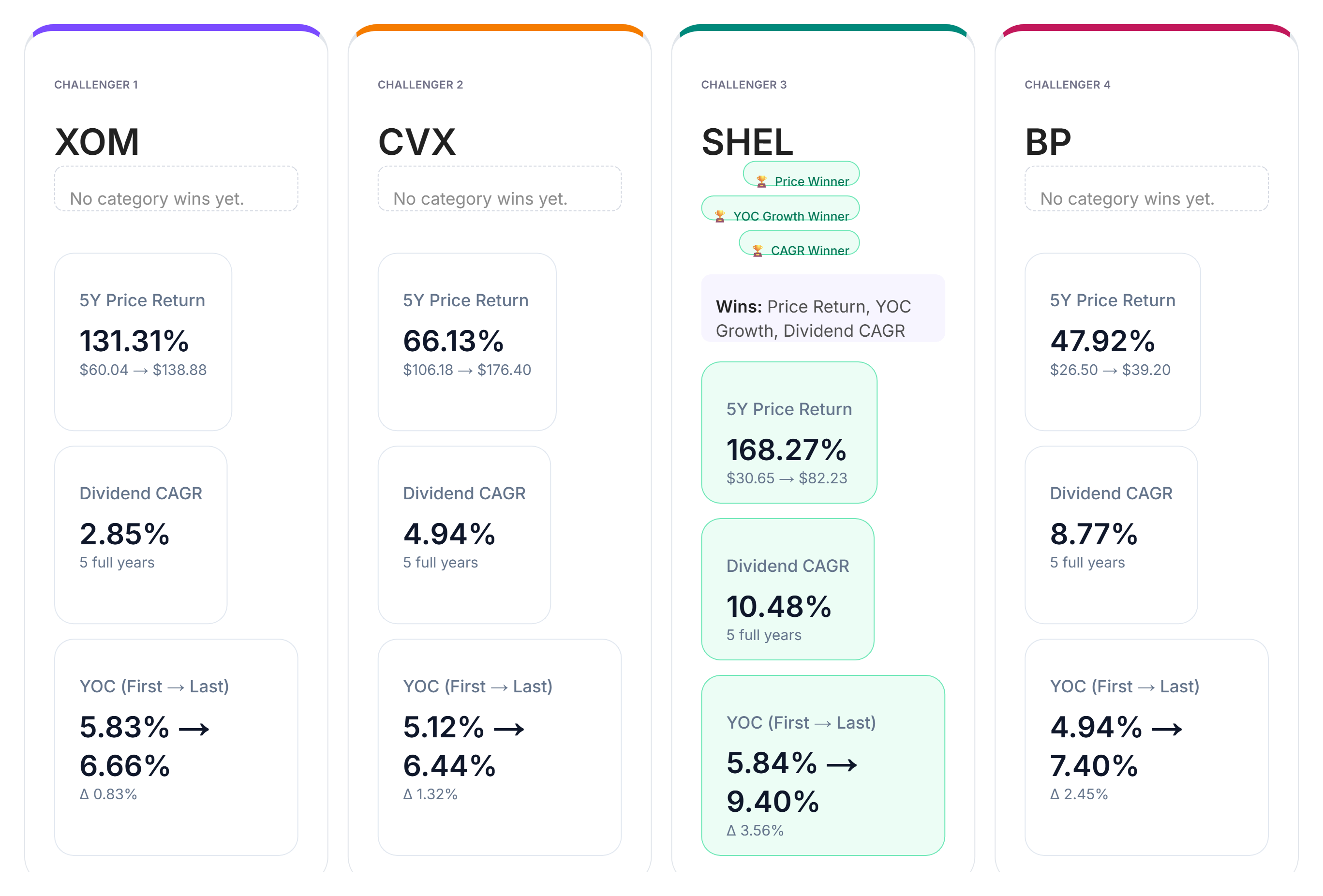
Looking across dividend growth, yield-on-cost growth, and total return, one company clearly separates itself from the rest.
Shell leads the group with a five-year dividend CAGR of 10.48%, delivering the fastest pace of dividend growth among the four companies.
Shell also records the strongest improvement in yield-on-cost, demonstrating the greatest increase in dividend income relative to the original investment over the five-year period.
Finally, Shell completes the sweep by posting the highest five-year total return, gaining 168.27%.
Exxon Mobil, Chevron, and BP all produce solid results across the measured categories, but none secure an individual category victory in this comparison. The outcome highlights Shell's exceptional combination of capital appreciation and dividend growth over the historical period.
Yield-on-Cost by Year
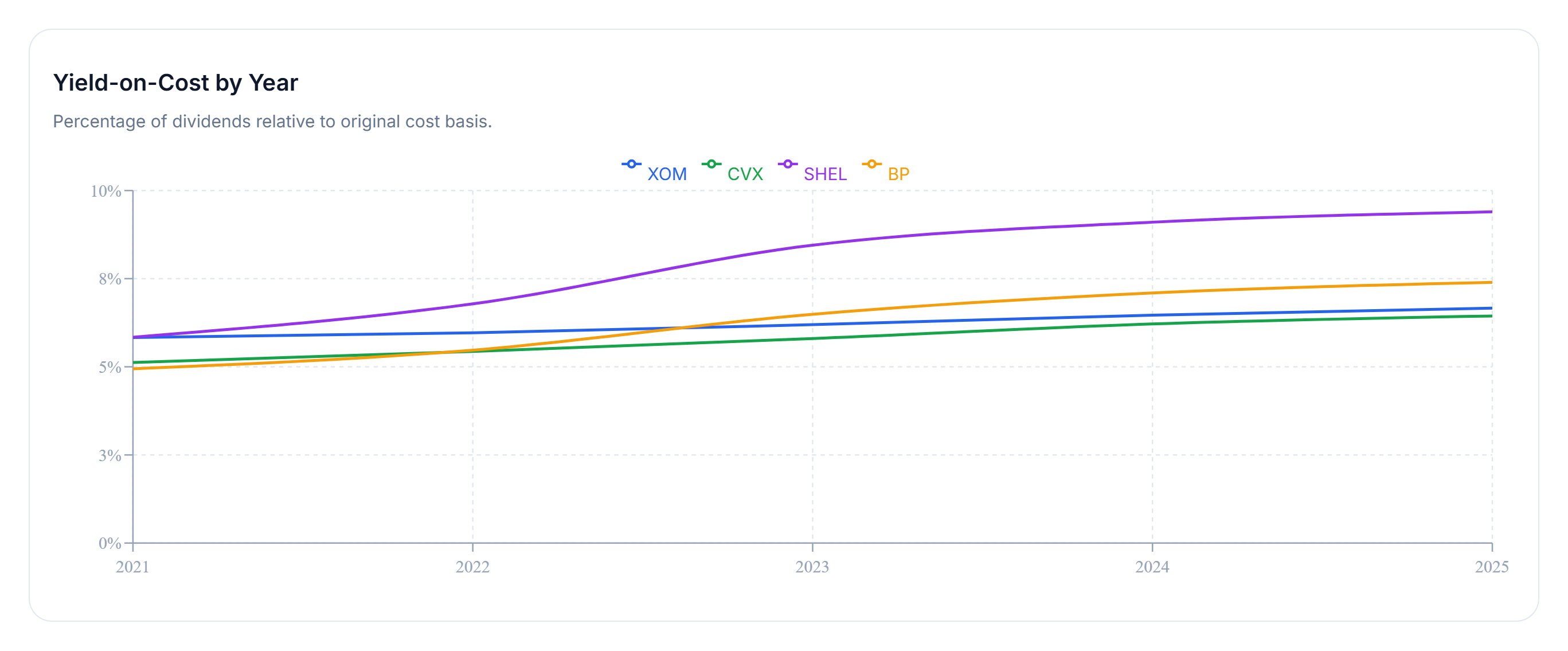
Yield-on-cost measures dividend income relative to the original purchase price rather than today's market value. It provides a useful way to evaluate how efficiently an investment grows income over time.
Shell again stands out, reaching a yield on cost of approximately 9.40% by the end of the five-year period.
Exxon Mobil, Chevron, and BP also demonstrate consistent income growth, although their trajectories are more gradual. While annual differences appear relatively small, compounding dividend increases become increasingly meaningful over longer investment horizons.
For dividend investors focused on growing future income rather than maximizing today's yield alone, yield-on-cost offers valuable insight into long-term income efficiency.
Now let's shift from historical performance to today's income picture.
Income Goal Comparison
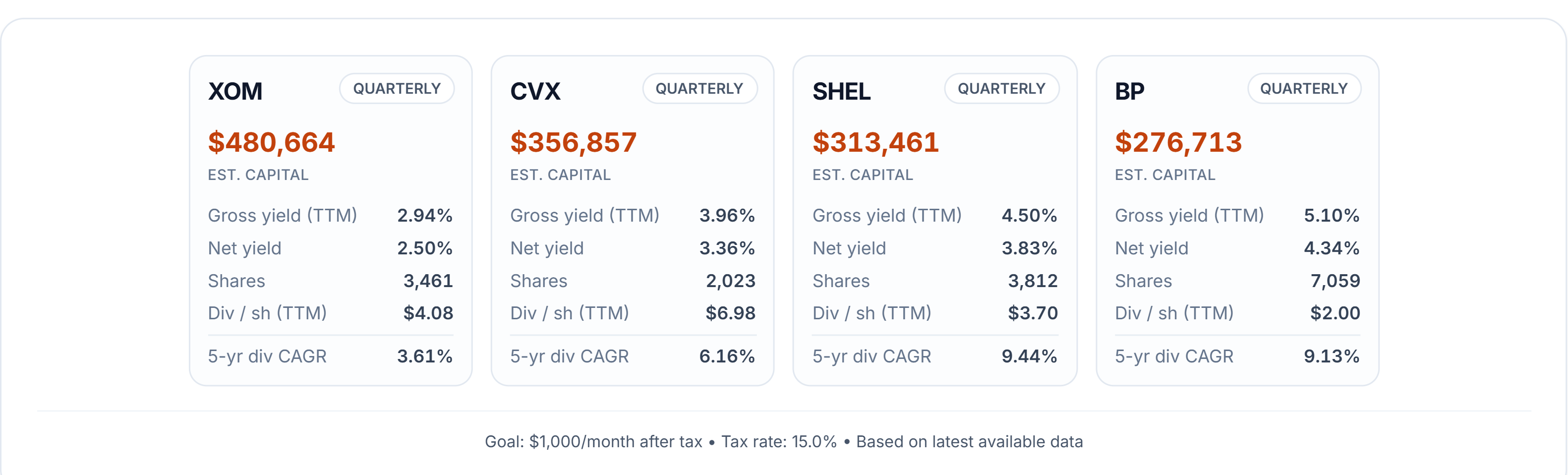
How much capital do you need to generate $1,000 per month in dividend income after taxes? The answer depends primarily on current dividend yield.
Assuming a 15% dividend tax rate, BP requires the least capital to reach the target, needing approximately $276,713 thanks to its current dividend yield of roughly 5.1%.
At the opposite end, Exxon Mobil requires approximately $480,664, reflecting its lower dividend yield of about 2.9%.
Chevron and Shell fall between those two extremes, offering a balance between attractive current income and stronger historical dividend growth.
The comparison cards make the tradeoff easy to visualize: higher-yield stocks generate the desired income with less upfront capital today, while faster dividend growers may reward patient investors over longer holding periods.
Yield Catch-Up Timeline
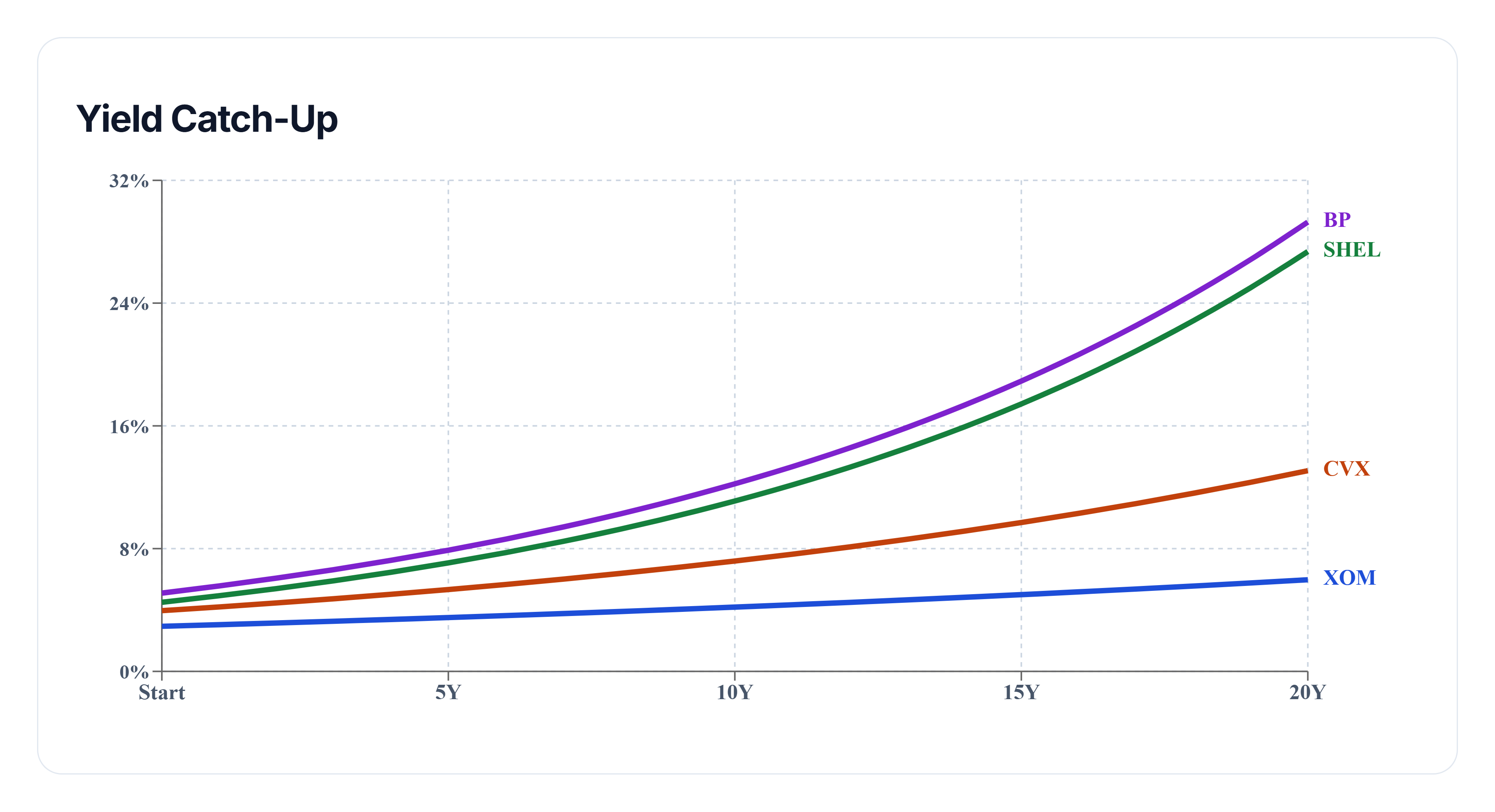
This projection estimates future yield-on-cost by assuming each company continues increasing its dividend at approximately the same pace achieved over the previous five years.
Shell delivers the strongest modeled dividend growth, steadily increasing future income through a higher dividend growth rate.
BP begins with the highest starting yield, giving investors a meaningful income advantage from day one.
One notable takeaway is that even after 20 years, Exxon Mobil's projected yield-on-cost still does not catch BP's. The model illustrates how a significantly higher starting yield can remain a durable advantage, even when compared with companies that continue growing their dividends.
Final Takeaway
Each of these global energy companies offers a different path toward dividend income.
Shell dominates the historical comparison, leading in dividend growth, yield-on-cost growth, and total return over the past five years. BP, however, stands out for investors prioritizing immediate income by requiring the least capital to generate a $1,000 monthly after-tax dividend stream.
Chevron occupies the middle ground, balancing current yield with dividend growth, while Exxon Mobil continues to represent a financially strong energy business despite requiring the most capital to reach today's income target.
Ultimately, the best choice depends on whether your priority is maximizing income today, accelerating future dividend growth, or finding a balance between the two over the long term.