The 14 Largest Dividend Aristocrats Ranked by 8-Year Dividend Growth (2018–2025)
Dividend yield often gets most of the attention, but for long-term income investors, dividend growth can be even more important.
A company can temporarily offer a high yield, but consistently raising its dividend year after year requires growing earnings, healthy cash flow, and disciplined capital allocation.
This visualization ranks the fourteen largest Dividend Aristocrats by their dividend growth between 2018 and 2025. Rather than focusing on share prices, it follows something income investors ultimately receive: steadily increasing cash distributions.
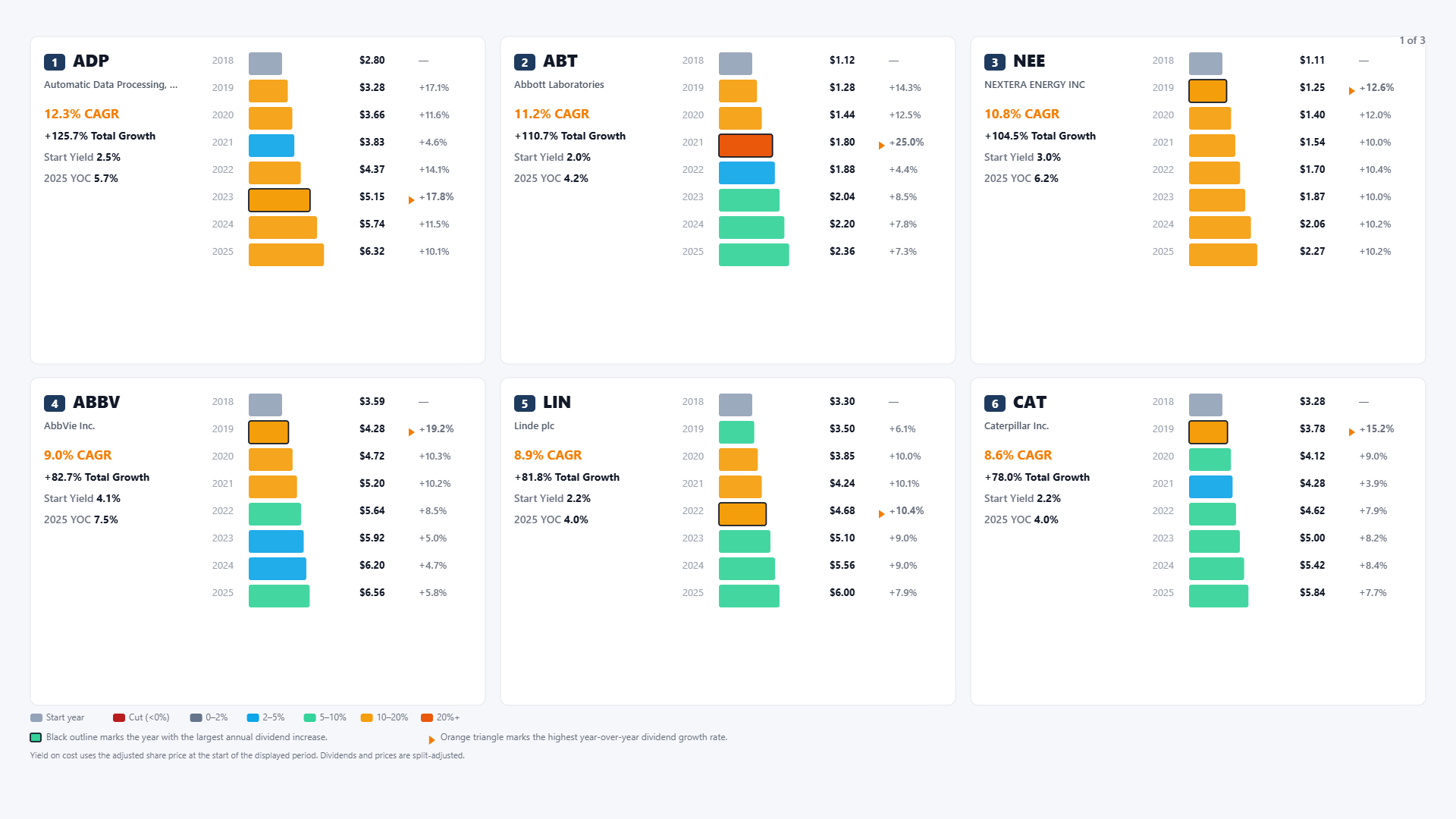
The top of the ranking is dominated by companies that delivered exceptional dividend growth over the eight-year period.
ADP leads the group, more than doubling its annual dividend while maintaining a compound annual growth rate above 12%. Abbott and NextEra Energy also stand out for their strong dividend growth.
Each horizontal bar represents one year of dividends. The color indicates the annual growth rate, making periods of faster and slower growth easy to identify.
The black outline highlights each company's largest annual dividend increase, while the orange marker identifies its highest year-over-year growth rate.
Yield on Cost adds another useful perspective. It shows the dividend yield an investor would have been earning in 2025 based on the share price at the beginning of 2018.
For ADP, the yield on the original purchase price increased from roughly 2.5% to nearly 6%, without purchasing any additional shares. That is the long-term effect of steadily growing income.
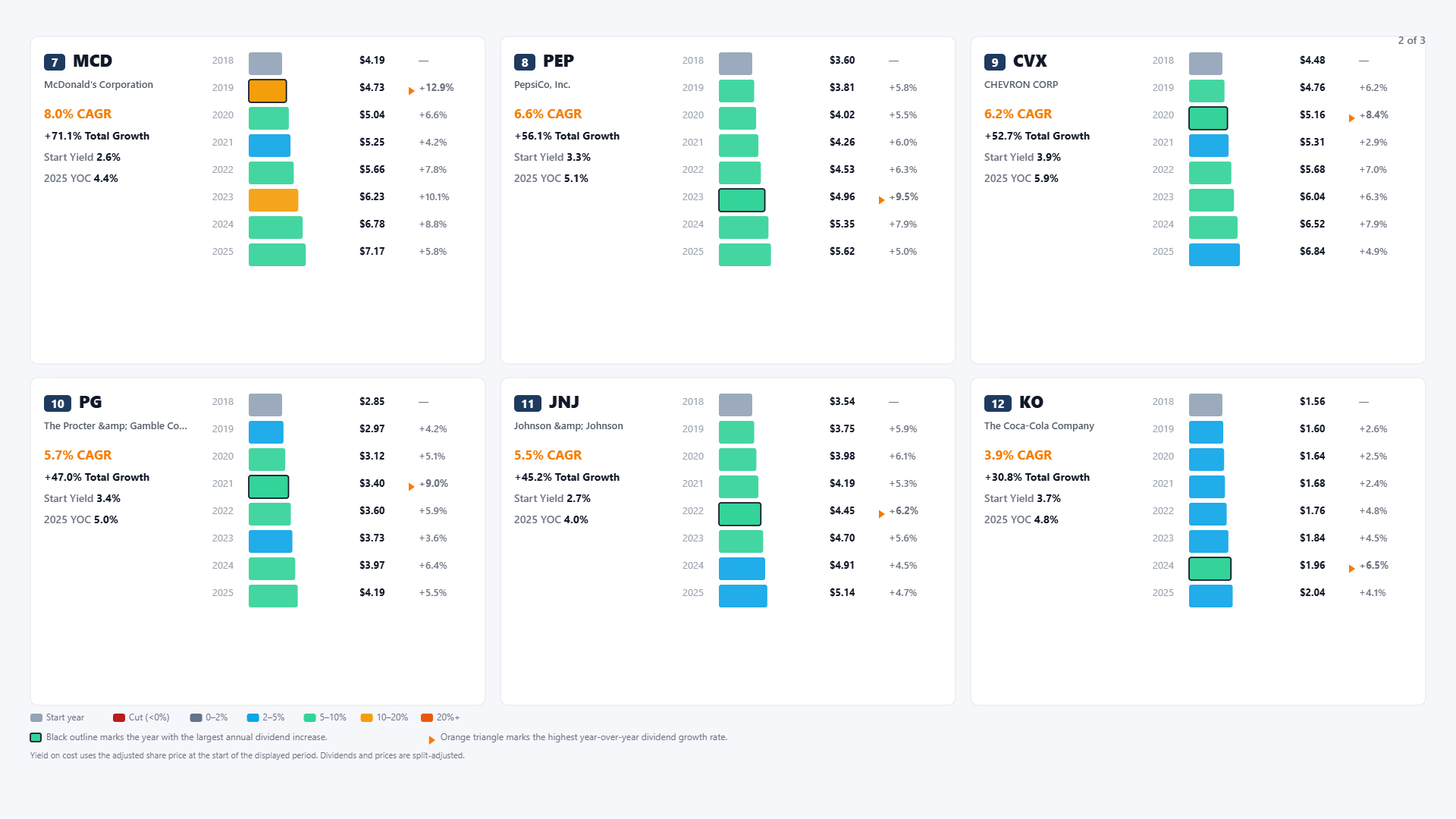
The middle of the ranking tells a different but equally important story.
Companies such as McDonald's, PepsiCo, Chevron, Procter & Gamble, Johnson & Johnson, and Coca-Cola did not grow their dividends as quickly as the leaders, but their annual increases were notably consistent.
That predictability can be valuable to income investors because it makes future dividend income easier to estimate across different economic environments.
This section also highlights the tradeoff between starting yield and dividend growth. A company with a higher initial yield and a slower growth rate can sometimes generate income results that compete with a faster-growing company that began with a lower yield.
Dividend investing is often a balance between income today and income growth tomorrow.
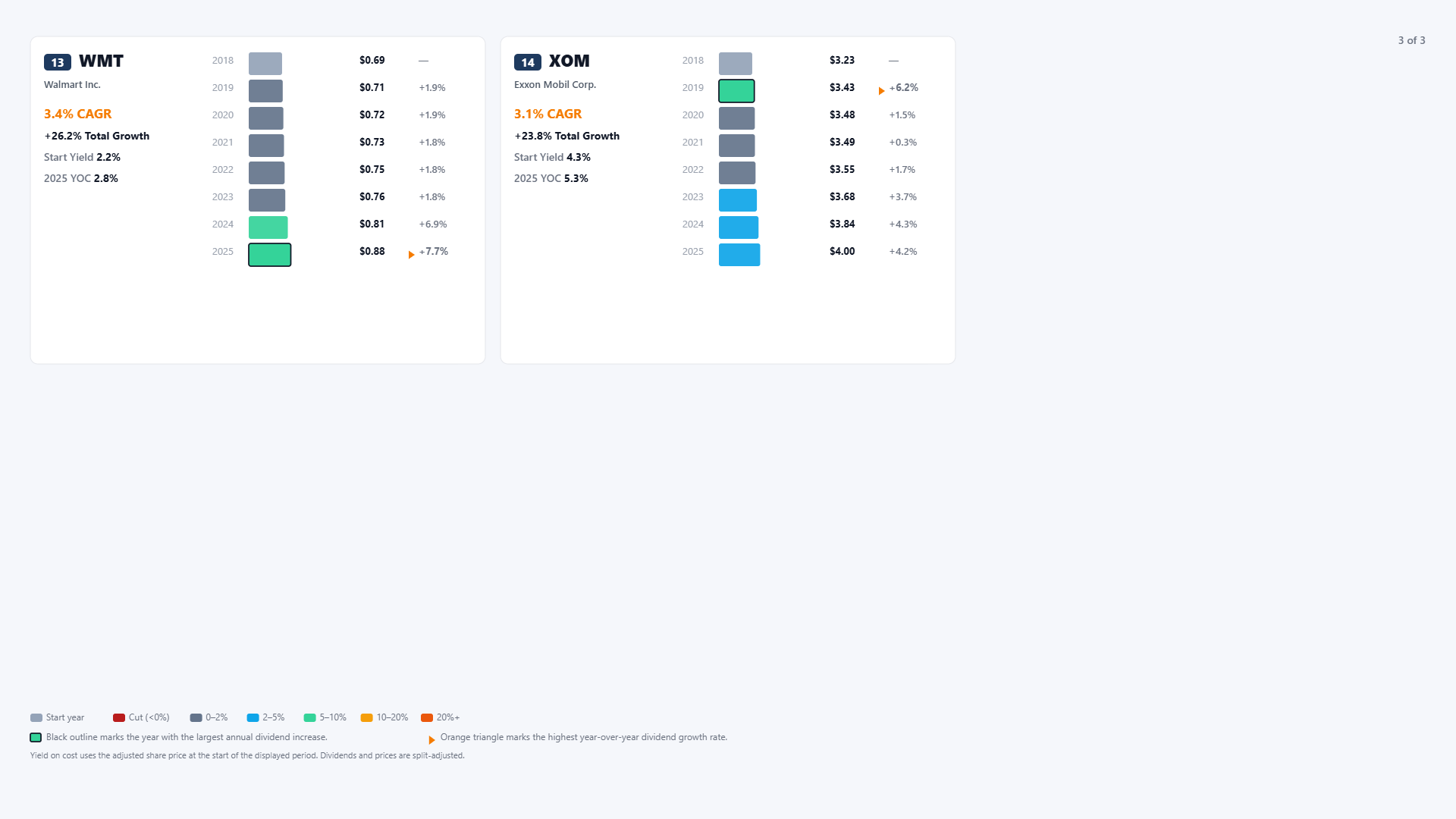
The final section includes Walmart and Exxon Mobil.
Their dividend growth was slower during this period, but both companies continued their long records of annual dividend increases.
That distinction matters. Dividend Aristocrat status does not mean that every company increases its dividend rapidly. It means that the company has continued raising its annual dividend through many different market and economic conditions.
Looking at dividend histories this way reveals patterns that are not visible from current yield alone. Some companies grow income quickly, while others rely on slower and more predictable increases.
Final Takeaway
Dividend growth can provide useful insight into business quality, financial strength, and a company's commitment to shareholders.
The fastest-growing dividend is not automatically the best investment, and the highest current yield does not always produce the strongest long-term income. Investors should consider starting yield, dividend growth, consistency, and the sustainability of the underlying business together.
DividendXray provides more visual tools for exploring dividend growth, yield on cost, and long-term income trends.