Healthcare Dividend Portfolio: JNJ, ABBV, PFE, and MRK Income Analysis

Portfolio Overview
This portfolio focuses on large, established pharmaceutical companies that combine reliable dividends with global healthcare demand. It includes Johnson & Johnson (JNJ), AbbVie (ABBV), Pfizer (PFE), and Merck (MRK) — four companies with global healthcare businesses and long operating histories.
JNJ provides diversified healthcare stability and decades of dividend growth across pharmaceuticals, medical devices, and consumer health products. ABBV enhances portfolio yield with strong pharmaceutical cash flow driven by its immunology and drug portfolio.
PFE contributes higher current income from one of the world’s largest pharmaceutical companies, while MRK strengthens the portfolio with steady dividend growth supported by blockbuster therapies and a broad research pipeline.
Together these companies form a healthcare dividend core built around resilient demand and globally diversified pharmaceutical revenue streams.
Dividend Growth Trend
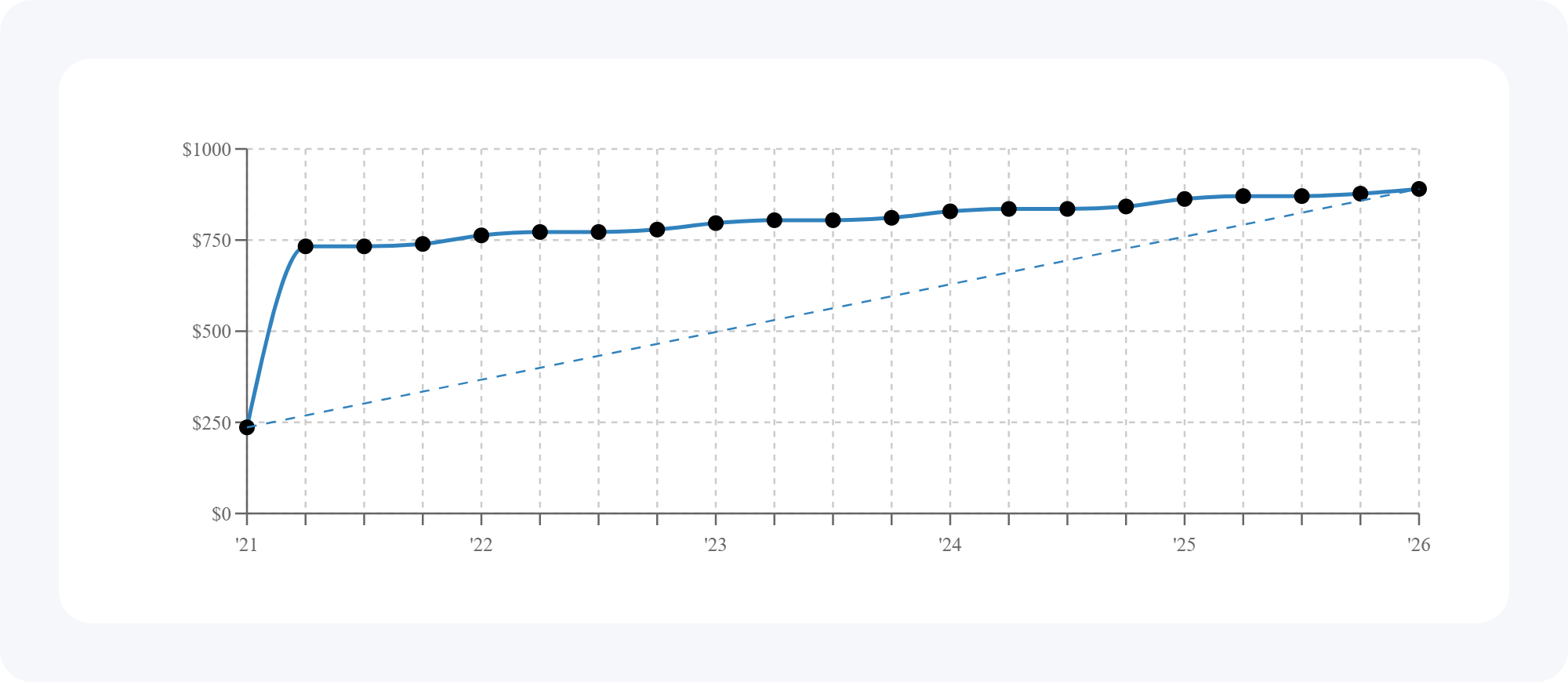
Here's the dividend growth trend for these holdings over the last five years.
The growth pattern across these companies is steady and consistent. Healthcare companies often benefit from durable demand and strong pricing power, which can support stable earnings and dividend payments across economic cycles.
That stability tends to translate into a gradually rising dividend stream — one of the core advantages of healthcare dividend portfolios. Over time, steady dividend growth can improve yield on cost and increase long-term portfolio income.
Portfolio Snapshot

Here's the quick snapshot for this portfolio:
- Yield on cost: 3.6%
- Annual dividend income: $3,561 per year
- Monthly dividend income: about $297 per month
- Dividend income growth: roughly 4.3% per year over five years
This profile represents a balanced income portfolio: a solid starting yield combined with consistent dividend growth from large pharmaceutical companies.
Income Breakdown by Holding
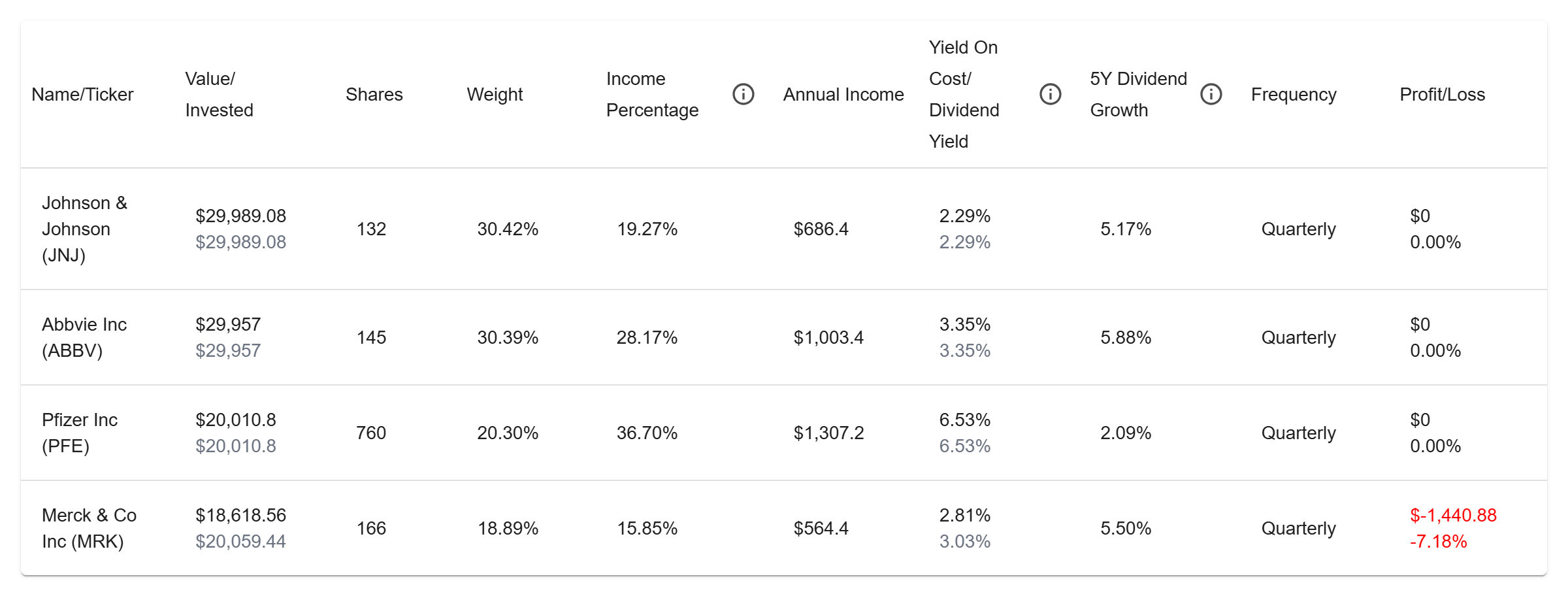
Here's how the portfolio's dividend income is split between the holdings:
- PFE: about 36.7% of the income (roughly $1,307 per year)
- ABBV: about 28.2% (about $1,003 per year)
- JNJ: about 19.3% (about $686 per year)
- MRK: about 15.8% (about $564 per year)
All holdings pay quarterly.
Five-year dividend growth rates help illustrate how the income stream has evolved:
- JNJ: steady long-term dividend growth from a diversified healthcare leader
- ABBV: stronger dividend growth supported by high pharmaceutical cash flow
- PFE: higher income contribution due to its larger dividend yield
- MRK: consistent dividend increases supported by major drug franchises
This combination creates a healthcare dividend engine that blends stable income today with gradual dividend growth over time.
Forward Income Outlook
If income growth continues in line with recent history, this portfolio's cash flow could rise steadily over time.
- Yield on cost may grow from 3.6% today to about 4.4% in five years
- Annual income could increase from $3,561 to roughly $4,393
- Monthly income could rise from $297 to about $366
And this projection assumes no new capital contributions and no dividend reinvestment.
That highlights one of the key advantages of dividend investing: when companies continue raising dividends over time, the income stream can grow steadily even if the portfolio itself stays unchanged.