Dividend Growth vs Earnings Growth: Looking Beyond the Dividend
Dividend growth is one of the first metrics many income investors look at.
A long history of annual dividend increases often signals a shareholder-friendly business and disciplined capital allocation. But dividend growth by itself doesn't explain how those increases were achieved.
Some companies raise dividends because earnings are growing rapidly. Others increase payouts by distributing a larger share of profits. In some cases, accounting events can temporarily distort reported earnings, making the relationship less obvious.
To provide a broader perspective, this analysis compares Dividend Growth, GAAP Diluted EPS Growth, and Inflation across the 10 largest holdings of the iShares Core Dividend Growth ETF (DGRO) from 2018 through 2025.
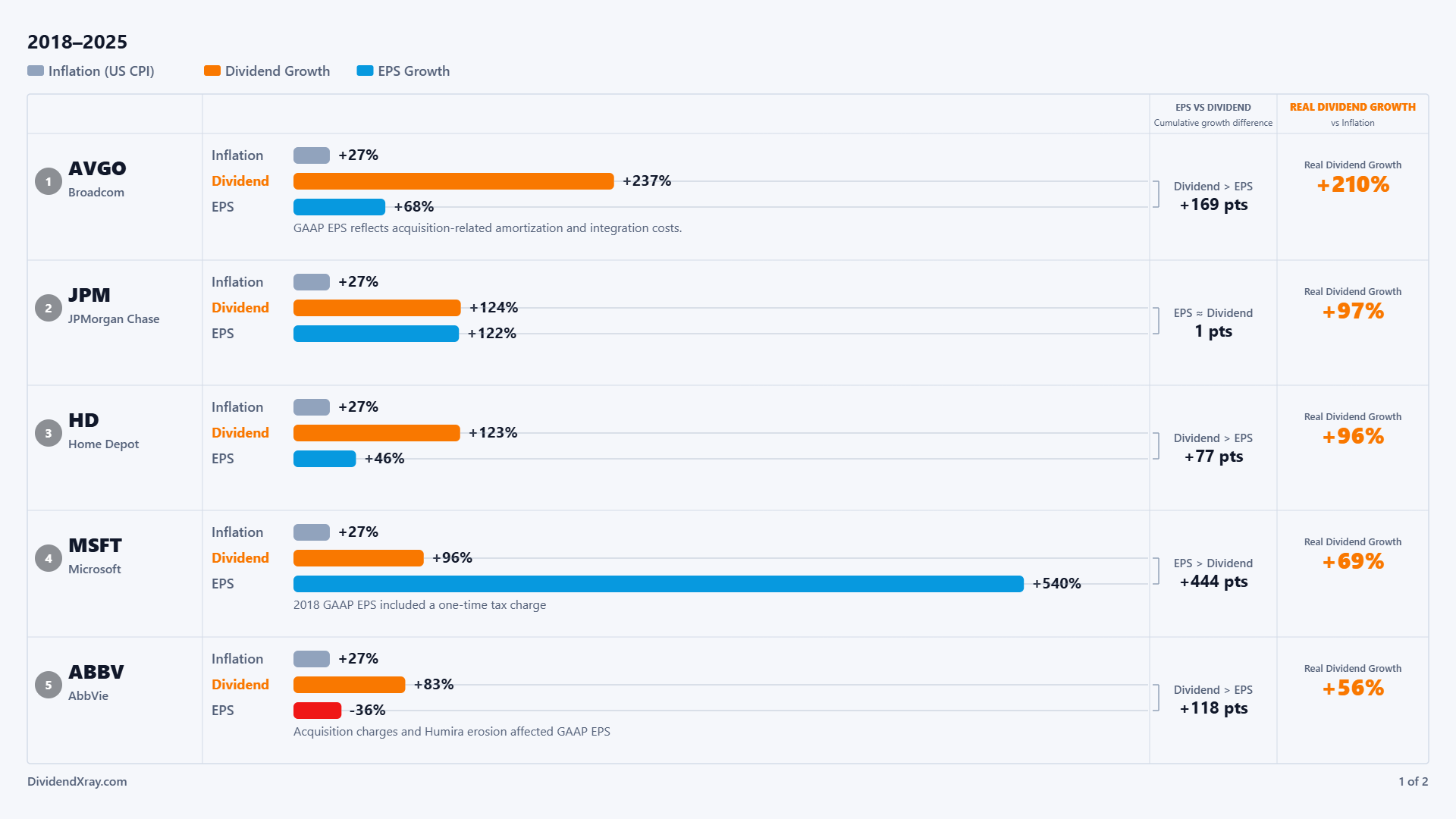
The first chart contains the five companies with the strongest real dividend growth over the period.
Broadcom immediately stands out. Its dividend increased more than 230%, while reported GAAP earnings grew much more slowly. The difference is largely explained by acquisition-related amortization and integration costs that reduced reported earnings without necessarily reflecting the underlying economics of the business.
JPMorgan presents almost the opposite picture. Dividend growth and earnings growth moved nearly in lockstep, suggesting that dividend increases closely followed improvements in profitability.
Home Depot rewarded shareholders aggressively by increasing its dividend much faster than earnings, expanding its payout ratio over time.
Microsoft produced exceptional GAAP earnings growth, although part of that increase reflects a depressed 2018 baseline caused by a one-time tax charge.
AbbVie demonstrates why context matters. Despite negative cumulative GAAP earnings growth, the company continued raising its dividend while acquisition-related accounting charges and Humira patent expiration weighed on reported results.
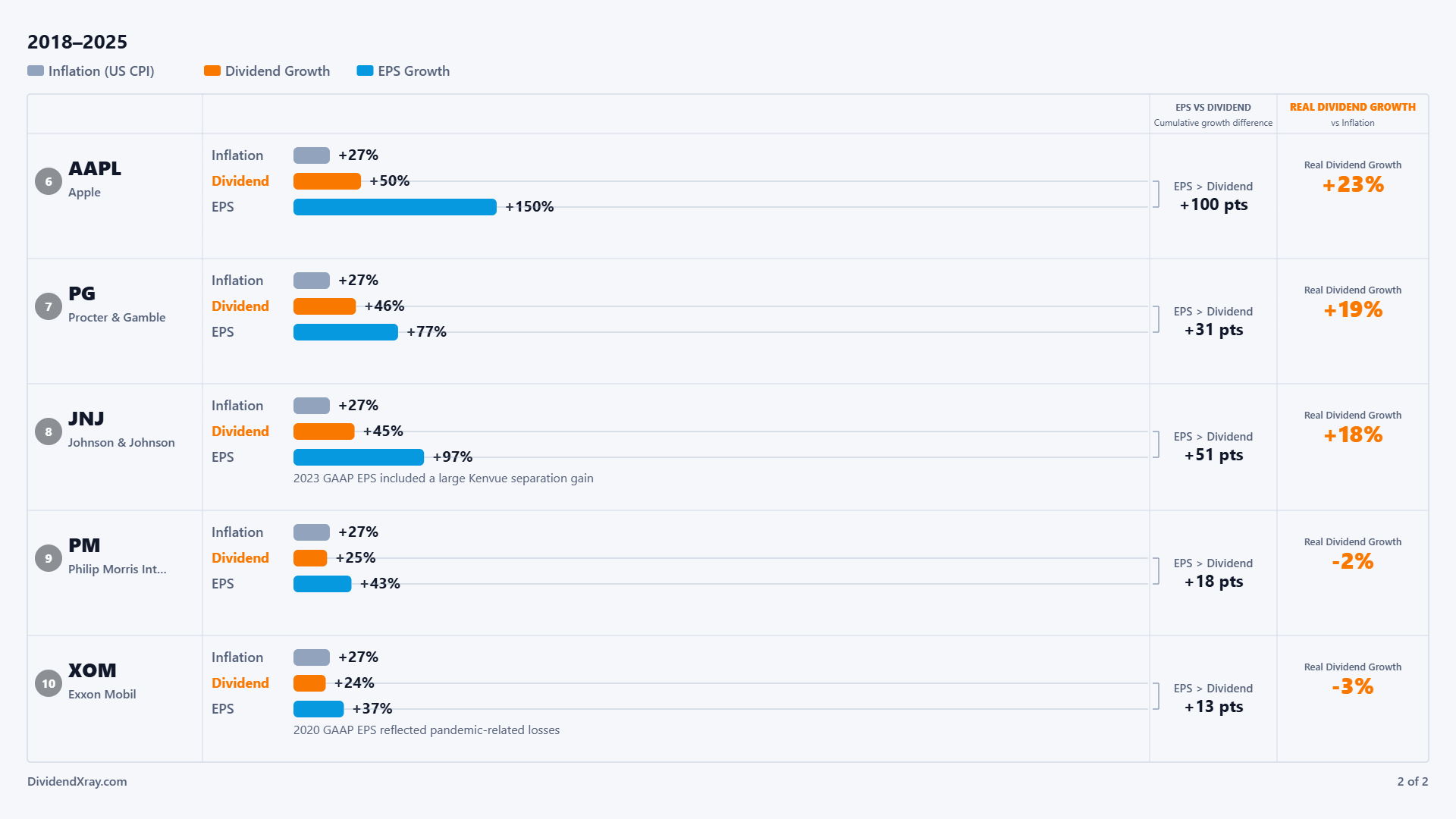
The remaining companies reinforce that sustainable dividend growth often depends on healthy earnings growth.
Apple generated earnings growth roughly three times faster than dividend growth, leaving substantial financial flexibility for future increases.
Procter & Gamble and Johnson & Johnson also maintained earnings growth comfortably ahead of dividend growth. Johnson & Johnson's reported results include a one-time gain from the Kenvue separation, but earnings still outpaced dividend growth overall.
Philip Morris and Exxon Mobil illustrate another important point: inflation matters.
Although both companies increased their dividends, cumulative inflation slightly exceeded dividend growth over the same period. As a result, investors experienced modestly negative real dividend growth, meaning purchasing power failed to keep pace with rising prices.
Looking only at dividend increases would have hidden that reality.
Final Takeaway
Dividend growth is an important metric, but it becomes much more meaningful when viewed alongside earnings growth and inflation.
Companies that consistently grow earnings while maintaining disciplined dividend increases are often better positioned to sustain those payouts over the long term. At the same time, investors should be mindful of one-time accounting events that can temporarily distort reported GAAP earnings, as well as inflation's impact on the real value of dividend income.
Visual comparisons like these make it easier to move beyond a single headline metric and understand what is really driving long-term dividend performance.
If you'd like to compare dividend growth, earnings growth, inflation, and other long-term income metrics across your own portfolio, explore the visual tools available on DividendXray.