Dividend ETFs vs Covered Call ETFs: How Income Changed Over Time
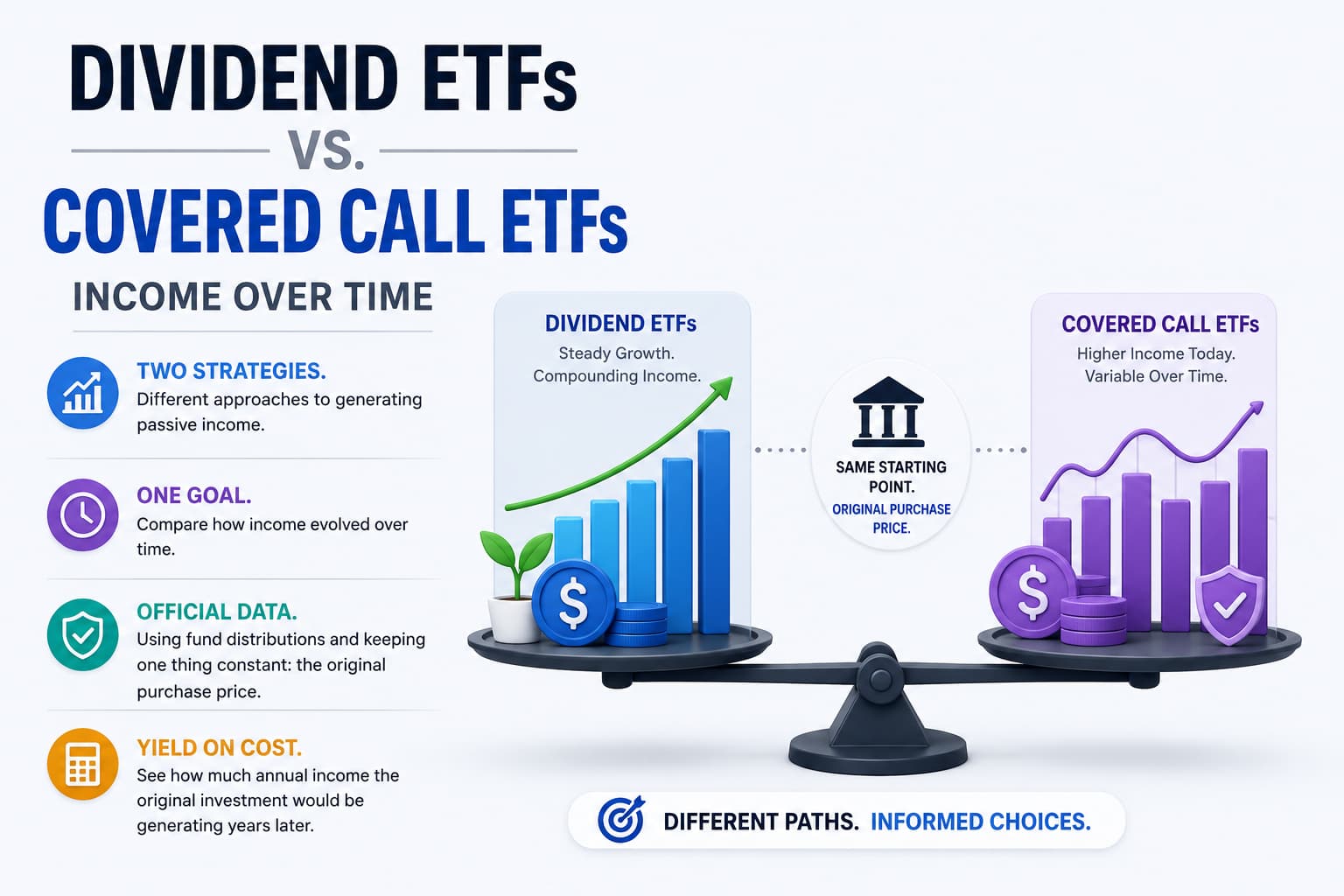
Traditional dividend ETFs and covered call ETFs are often compared because both can generate passive income. While they may appear similar at first glance, the way they produce that income is fundamentally different.
This visual analysis compares both approaches using a common starting point: the original purchase price. Rather than looking only at current yields, the charts follow how each investment's annual yield on cost evolved over time using official fund distribution data.
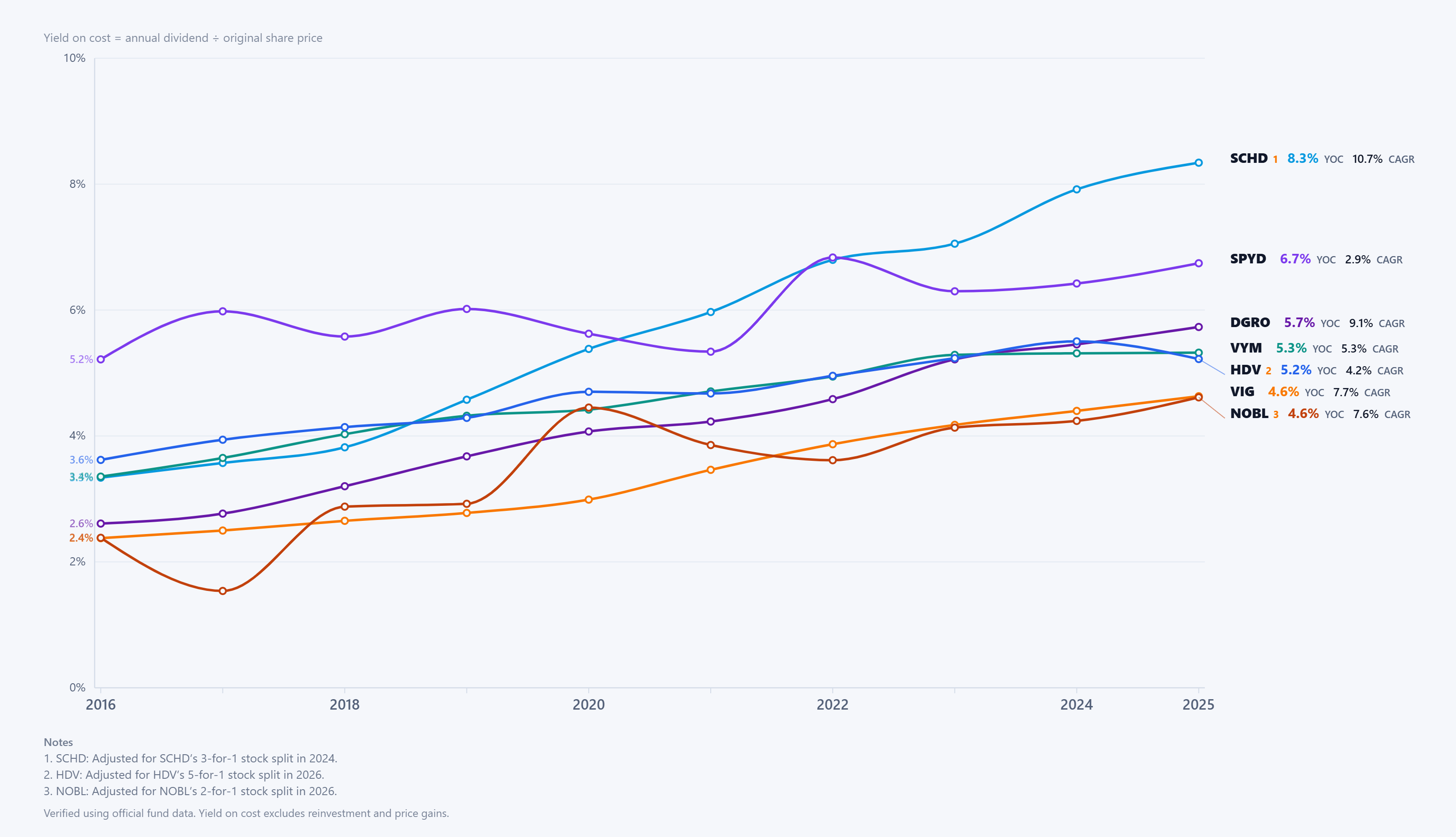
The first chart focuses on traditional dividend ETFs including SCHD, DGRO, VYM, SPYD, VIG, and NOBL.
SCHD stands out for its long-term income growth. Starting with a relatively modest yield on cost in 2016, it steadily increased throughout the decade and ultimately surpassed several funds that initially offered much higher income.
DGRO also demonstrated strong dividend growth, although at a slower pace, while VYM maintained a balanced profile with moderate but consistent income increases. SPYD began with one of the highest starting yields, yet its distributions proved less consistent over time, allowing SCHD to eventually overtake it.
VIG and NOBL produced lower initial income, but both illustrated the gradual dividend growth that many long-term dividend investors seek. Together, these funds highlight how steadily increasing distributions can significantly improve income over an extended holding period.
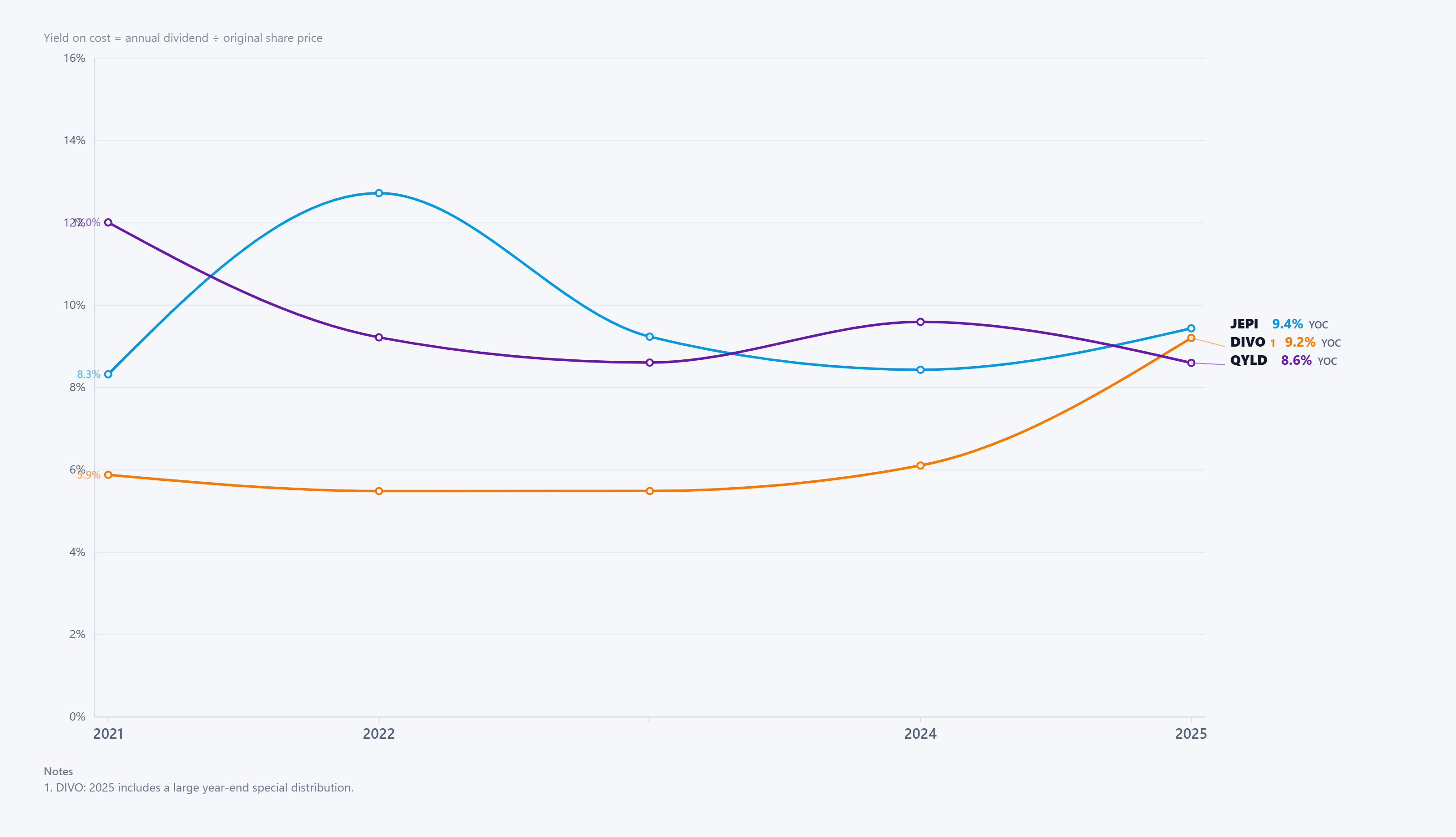
The second chart examines covered call ETFs, which generate additional income by selling call options rather than relying primarily on dividend growth.
That difference produces a noticeably different income profile. JEPI experienced a significant increase in distributions during the volatile 2022 market as option premiums expanded before returning toward more typical levels. QYLD started with exceptionally high income but gradually declined over the following years, while DIVO followed a steadier path before a large special distribution created a noticeable jump in 2025.
Compared with traditional dividend ETFs, covered call funds generally emphasized generating higher current income, but their distributions were more closely tied to changing market conditions and option premiums.
Final Takeaway
These charts illustrate that dividend ETFs and covered call ETFs are designed with different objectives in mind.
Traditional dividend ETFs have historically focused on steadily growing income over many years, while covered call ETFs have prioritized generating higher income today, accepting that distributions may fluctuate as market conditions change.
Neither approach is inherently better. The more appropriate choice depends on whether an investor values long-term dividend growth, higher immediate income, or a combination of both.
If you enjoy comparing investment strategies through data-driven visualizations, explore DividendXray for more interactive charts and dividend research.