Consumer Dividend Growth Portfolio Analysis: HD, LOW, MCD & SBUX
Portfolio Overview
This portfolio is built around shareholder-friendly consumer brands with long histories of dividend growth and cash generation. It combines The Home Depot (HD), Lowe's Companies (LOW), McDonald's (MCD), and Starbucks (SBUX) to create a diversified income stream across home improvement, restaurants, and consumer discretionary spending.
HD and LOW provide exposure to the home improvement sector through two of the largest and most established retailers in North America. MCD adds a global restaurant franchise supported by decades of brand strength and consistent dividend increases. SBUX complements the portfolio with worldwide coffee operations and growing cash distributions supported by its extensive international footprint.
Dividend Growth Trend
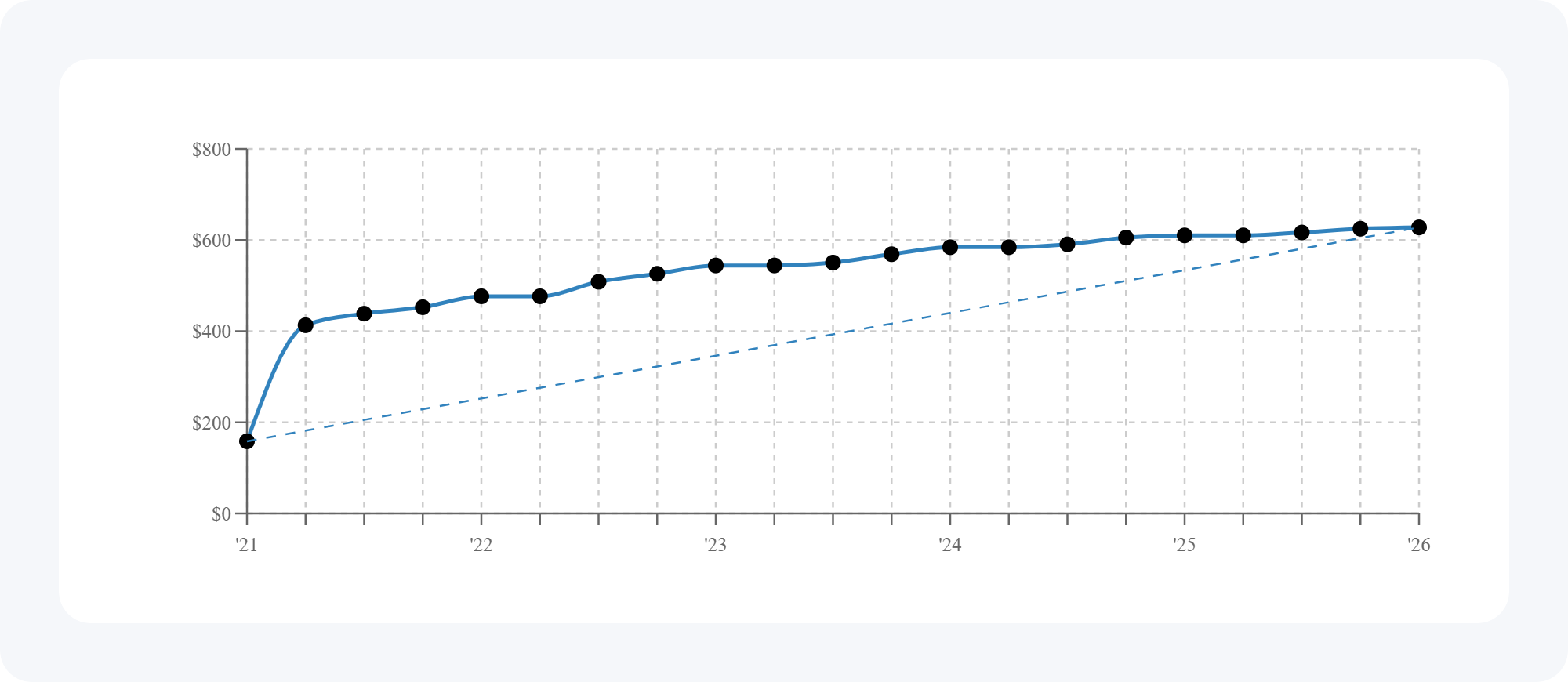
Here's the dividend growth trend for these holdings over the last five years.
The trend has been remarkably steady and consistent. This highlights one of the core benefits of dividend growth investing: even without adding new capital, a portfolio built around businesses that regularly increase their dividends can generate a growing stream of income over time. As dividends rise, yield on cost can gradually improve and long-term cash flow may become increasingly meaningful.
Portfolio Snapshot

Here's the quick snapshot for this portfolio:
- Yield on cost: 2.5%
- Annual dividend income: $2,511 per year
- Monthly dividend income: about $209 per month
- Dividend income growth: roughly 8.9% per year over five years
This portfolio represents a classic dividend growth approach: a relatively modest starting yield combined with a focus on businesses that have historically increased shareholder payouts over time.
Income Breakdown by Holding
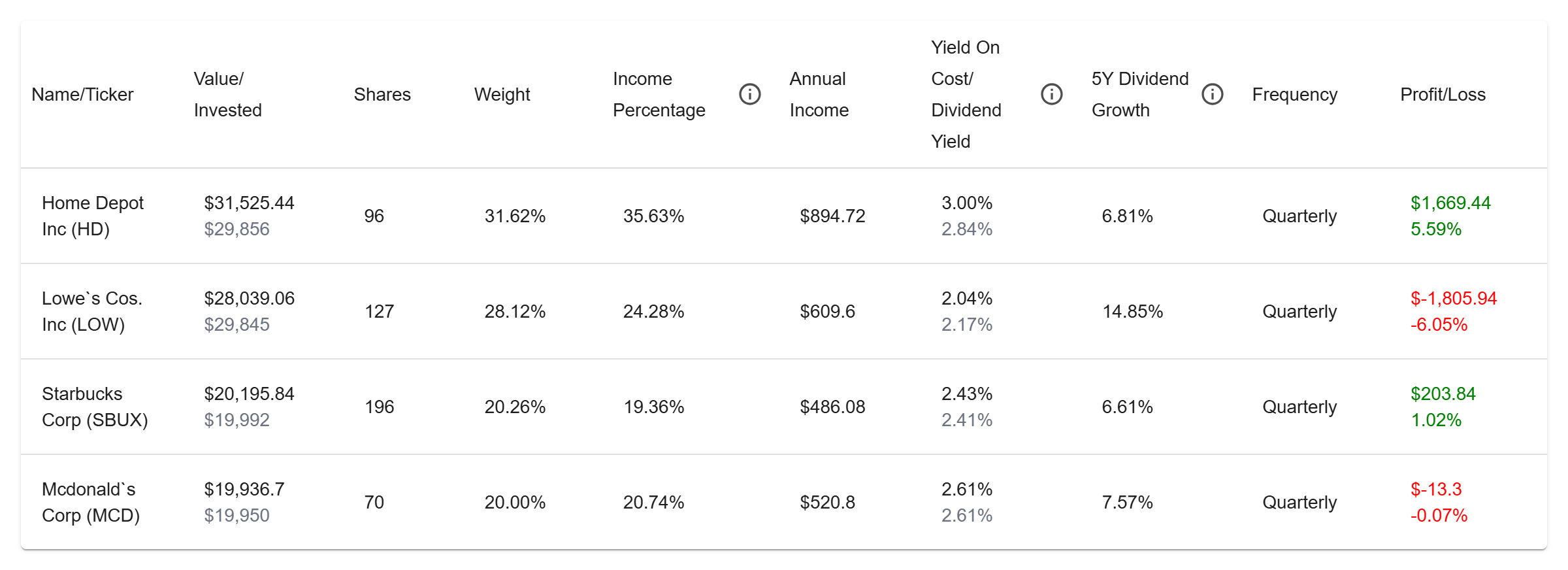
Here's how the portfolio's dividend income is split between the holdings:
- HD: about 35.6% of the income (roughly $895 per year)
- LOW: about 24.3% (about $610 per year)
- MCD: about 20.7% (about $521 per year)
- SBUX: about 19.4% (about $486 per year)
All holdings pay quarterly dividends.
5-year dividend growth rates included in this portfolio:
- HD: 6.8%
- LOW: 14.8%
- MCD: 7.6%
- SBUX: 6.6%
This combination creates a balanced dividend growth engine, blending mature blue-chip businesses with strong cash generation and a long history of rewarding shareholders through growing dividend payments.
Forward Income Outlook
If dividend growth continues in line with recent history, this portfolio's cash flow could rise steadily over time.
- Yield on cost may grow from 2.5% today to about 3.9% in five years
- Annual income could increase from $2,511 to roughly $3,842
- Monthly income could rise from $209 to about $320
- And this projection is described as happening without adding new capital or reinvesting dividends
That's the long-term appeal of dividend growth investing. When businesses continue increasing their dividends, the income stream can strengthen significantly over time while requiring no additional contributions from the investor.