$100K Income Portfolio Analysis: SCHD, JEPI, ARCC & Realty Income

Portfolio Overview
This portfolio is designed to generate strong current income through a blend of dividend growth, covered call strategies, high-yield credit, and real estate cash flow. It combines the Schwab U.S. Dividend Equity ETF (SCHD), JPMorgan Equity Premium Income ETF (JEPI), Ares Capital (ARCC), and Realty Income (O) to create a diversified dividend engine with both stability and yield.
SCHD provides a foundation of high-quality dividend growers with strong balance sheets and long-term income growth potential. JEPI enhances yield by generating option income through a covered call strategy, while ARCC adds high-yield credit exposure through the business development company structure. Realty Income contributes stable monthly REIT income supported by long-term commercial property leases.
Dividend Growth Trend
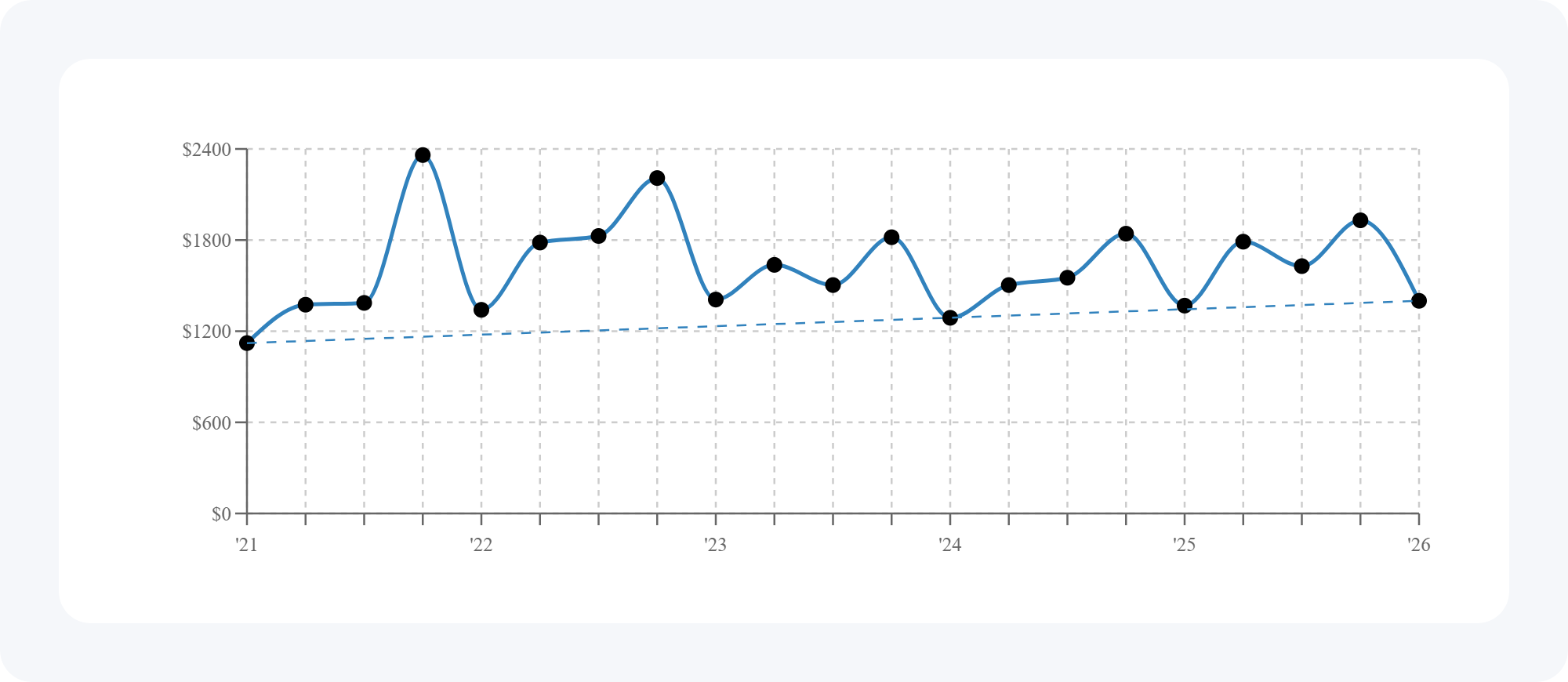
Here's the dividend growth trend for these holdings over the last five years.
With more than 35% of portfolio income coming from covered call strategies, the overall income stream can be somewhat volatile. Covered call income depends on market conditions and option premiums, which means dividend payments may fluctuate more than those from traditional dividend growth stocks.
Even so, combining covered call income with dividend growers, BDCs, and REITs can still produce a portfolio that generates strong cash flow while maintaining moderate income growth over time.
Portfolio Snapshot

Here's the quick snapshot for this portfolio:
- Yield on cost: 6.7%
- Annual dividend income: $6,668 per year
- Monthly dividend income: about $556 per month
- Dividend income growth: roughly 3.8% per year over five years
- Average ETF expense ratio: 0.10% (about $123 per year in fees)
This portfolio emphasizes higher starting income today, supported by covered call strategies and high-yield credit exposure, while still maintaining some income growth potential through dividend-growing equities.
Income Breakdown by Holding
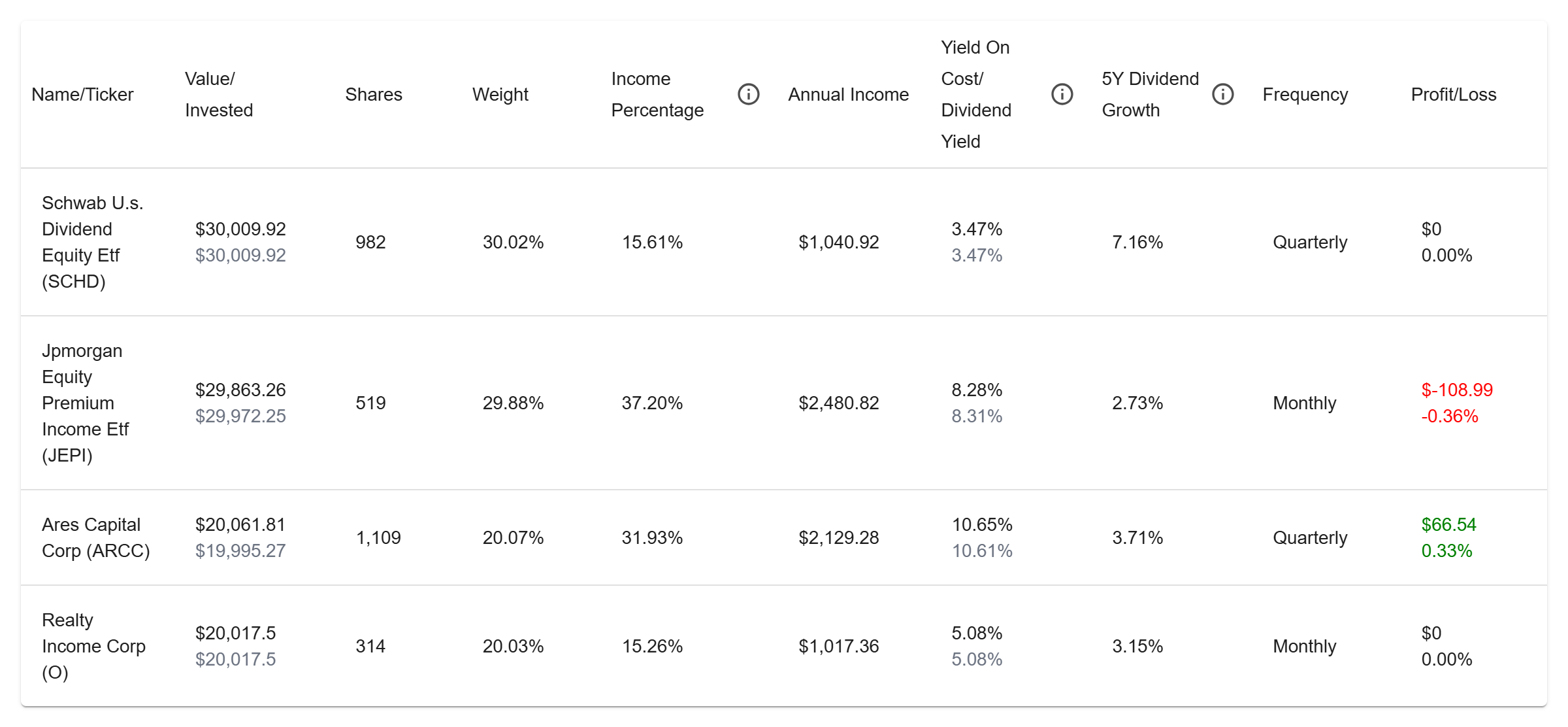
Here's how the portfolio's dividend income is split between the holdings:
- JEPI: about 37.2% of the income (roughly $2,481 per year)
- ARCC: about 31.9% (about $2,129 per year)
- SCHD: about 15.6% (about $1,041 per year)
- O: about 15.3% (about $1,017 per year)
Realty Income pays monthly, while SCHD, JEPI, and ARCC primarily pay quarterly.
5-year dividend growth rates included in this portfolio:
- JEPI: 2.7%
- ARCC: 3.7%
- SCHD: 7.2%
- O: 3.1%
This combination produces a high-yield income engine where covered call income and BDC dividends generate strong cash flow, while SCHD and Realty Income contribute steadier long-term dividend growth.
Forward Income Outlook
If income growth continues in line with recent history, this portfolio's cash flow could rise steadily over time.
- Yield on cost may grow from 6.7% today to about 8% in five years
- Annual income could increase from $6,668 to roughly $8,035
- Monthly income could rise from $556 to about $670
- And this projection is described as happening without adding new capital or reinvesting dividends
This highlights the potential benefit of combining high starting yield with moderate dividend growth, allowing the income stream to gradually increase even without additional investment.