McDonald's vs Starbucks vs Pfizer vs Verizon Dividend Battle

Portfolio Overview
In this DividendXray battle, we compare four well-known dividend stocks across income growth, yield-on-cost expansion, and total return performance over a five-year period.
- McDonald's (MCD) is a global restaurant leader known for steady cash flow generation and consistent dividend growth.
- Starbucks (SBUX) combines powerful brand recognition with expanding global store growth and rising shareholder distributions.
- Pfizer (PFE) represents the pharmaceutical sector, offering a higher starting dividend yield supported by a large portfolio of medicines and vaccines.
- Verizon (VZ) provides telecom exposure with one of the highest yields in the group, backed by recurring subscription revenue from wireless services.
Each company represents a different balance between dividend yield, dividend growth, and business model stability, creating an interesting comparison for income-focused investors.
Category Winners
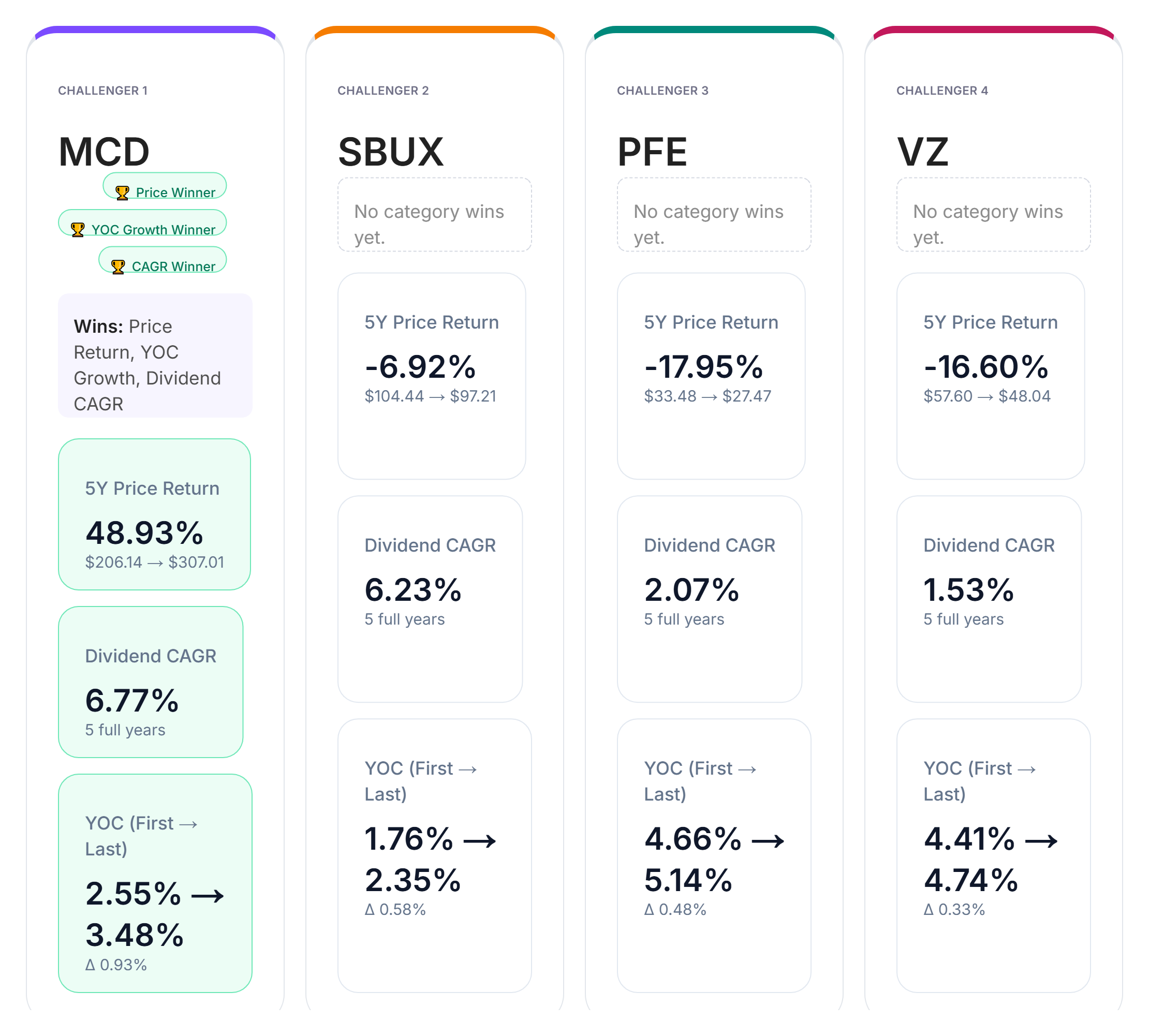
Looking at the data across dividend CAGR, yield-on-cost growth, and price return, clear category leaders emerge.
In dividend growth, McDonald's leads the group with a five-year dividend CAGR of 6.77%.
For yield-on-cost growth, McDonald's again shows the strongest improvement from the first year to the last year, highlighting its efficient dividend expansion relative to the original investment.
In price return, McDonald's also comes out ahead with a five-year return of 48.93%, outperforming the other challengers in total appreciation.
Starbucks, Pfizer, and Verizon all deliver solid results in specific areas, but none secure a category win in this comparison. The outcome illustrates how strong dividend growth combined with business momentum can drive both income expansion and capital appreciation.
Yield-on-Cost by Year
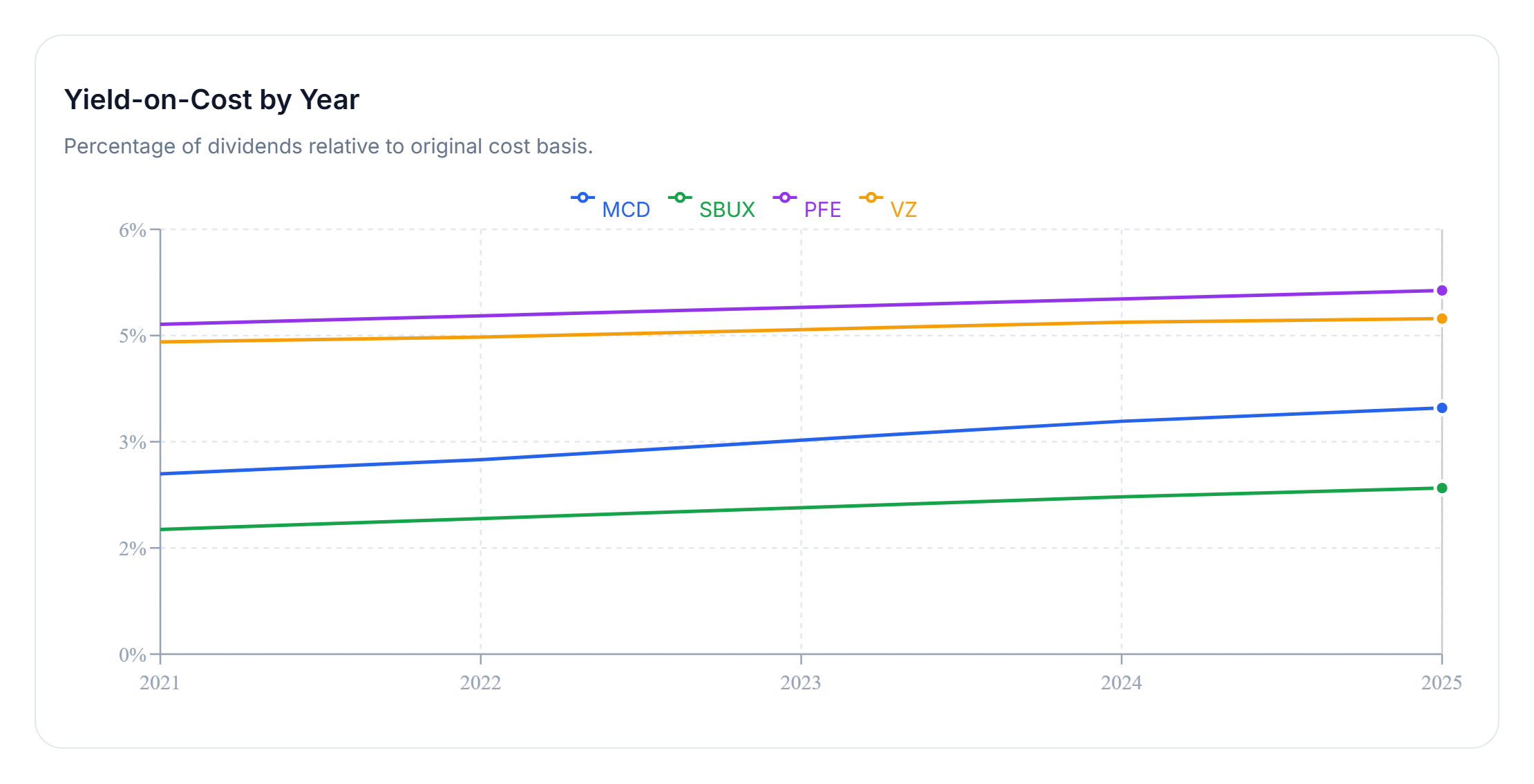
Yield-on-cost measures dividend income relative to the original capital invested. Unlike current yield, it reflects how effectively a company grows income for long-term shareholders.
Over the five-year period, Pfizer stands out with the strongest income efficiency, reaching approximately 5.14% yield on cost by the end of the timeframe.
McDonald's, Starbucks, and Verizon also demonstrate steady upward income trends during the same five-year window. While their trajectories differ slightly, each shows the compounding impact of consistent dividend payments over time.
For dividend investors focused on income growth, these yield-on-cost trends reveal how different business models translate into long-term income expansion.
Final Takeaway
There is no single "perfect" dividend stock. Each company represents a different combination of yield, dividend growth, and business stability.
This battle shows that McDonald's currently dominates across the major performance categories, combining strong dividend growth with the highest total return in the group.
Meanwhile, Pfizer demonstrates the strongest income efficiency, reaching the highest yield on cost by the end of the five-year period.
Ultimately, the best choice depends on investor priorities. Some may prefer the growth-driven dividend expansion of McDonald's and Starbucks, while others may prioritize the higher starting yield offered by companies like Pfizer and Verizon.
Dividend investing often benefits from diversification across these different strategies — balancing growth, income, and stability within a long-term portfolio.